
Five Australian Train Trips in Five Years (and Why I Built the Tools)

Let’s get the disappointment out of the way first: Australian long-distance trains are nothing like Europe’s. There’s no TGV gliding across the countryside at 300km/h, no Swiss precision, no turn-up-and-go frequency. Our trains are slow, often old, sometimes only run twice a week, and a few of them can’t even charge your phone. And yet I keep getting on them. Over the past five years I’ve taken the train to Longreach, Broken Hill, Coffs Harbour, Dubbo and Melbourne — and despite everything I just said, I’d do most of them again tomorrow.
Landing overseas? Sort your data first
An eSIM installs before you fly — no local SIM queue, no roaming bill.
Code: DREWDEALNEW (new users) · already have Airalo? Use DREWDEAL instead
(Small referral our way if you use our link — doesn’t change your price.)
This is the honest account of those five trips: what was good, what wasn’t, and why — after enough of them — I sat down and built a pair of free tools to map every long-distance train in New South Wales and Queensland, because working out what actually runs where turned out to be the hardest part of the whole thing.
Longreach — the one that converts people
If you only ever take one Australian train, make it the Spirit of the Outback from Brisbane to Longreach. It’s the closest thing we have to the famous transcontinental journeys — the Ghan, the Indian Pacific — but at a fraction of the price. You get a private sleeper cabin: your own little room with a door you lock, a seat the attendant folds down into a proper bed at night, and the outback rolling past in the dark.
It’s not perfect — the toilet and shower are shared at the end of the carriage, not in the cabin — but for a night, watching the stars go by, I didn’t care. And at the far end is Longreach: the Qantas Founders Museum (Qantas was literally born out here) and the Stockman’s Hall of Fame. This is the trip I send people on when they tell me they don’t “get” train travel. It converts them.
Broken Hill — awesome, but too long in one go
The weekly Outback Xplorer to Broken Hill is a genuine epic — a single-seat run all the way to the far west, thirteen hours and twenty minutes of it, departing Sydney on a Monday and coming back on the Tuesday. Broken Hill itself is wonderful: the mining heritage, the Pro Hart gallery, the desert light. I loved it.
But I’ll be honest — thirteen hours in a single sitting is a lot, and if I did it again I’d flip the whole thing around. Here’s the hack a points site should tell you: fly to Broken Hill, take the train back. Qantas runs frequent-flyer redemption flights out to Broken Hill, so you burn a few points to get there fresh, then ride the Outback Xplorer home for the adventure — and break the return with a night in Orange, timing it so you cross the Blue Mountains in daylight rather than watching the best scenery slide past in the dark. Plane out, train back, a stopover in the middle: the best of all of it. I wrote the trip up in full in my Broken Hill review.
Dubbo — go for what’s next door
I took the daily Central West XPT out to Dubbo in 2023, two nights and a day, with a mate. The reason was oddly specific: an exhibition at the Western Plains Cultural Centre called The Band from Dubbo: A History of The Reels — a proper deep-dive on the Dubbo band behind “Quasimodo’s Dream,” which a panel once voted one of the ten best Australian songs ever written. I saw The Reels live in my youth and still have one of their albums mounted on my wall, so this was never going to be a hard sell. For anyone who grew up with that song, the exhibition was a small joy.
Travelling with a mate, we skipped the zoo (Taronga Western Plains is Dubbo’s headline act, but you don’t need it on a lads’ trip). And honestly? The real prize near Dubbo isn’t in Dubbo at all — it’s the Warrumbungles on its doorstep, some of the best hiking in inland New South Wales. The XPT gets you out there comfortably; the mountains do the rest.
Coffs Harbour — the road trip that became a train trip
This one wasn’t really a train holiday. We did a road trip up the coast with our son, and somewhere around Coffs he peeled off to Brisbane and left Julie and I to catch the North Coast XPT home. Which, as it turns out, is a perfectly civilised way to end a holiday — let someone else drive while you watch the coast unspool.
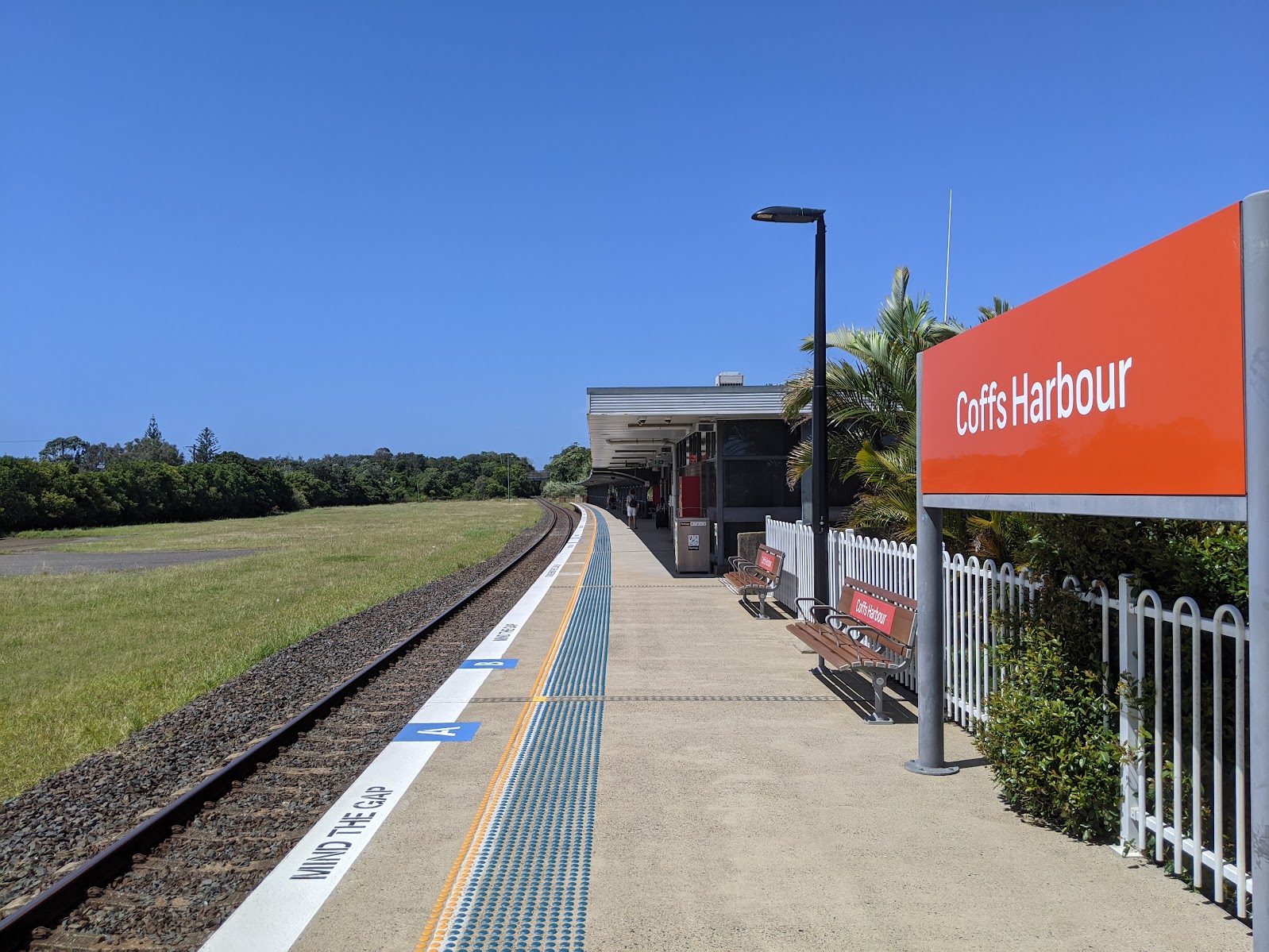
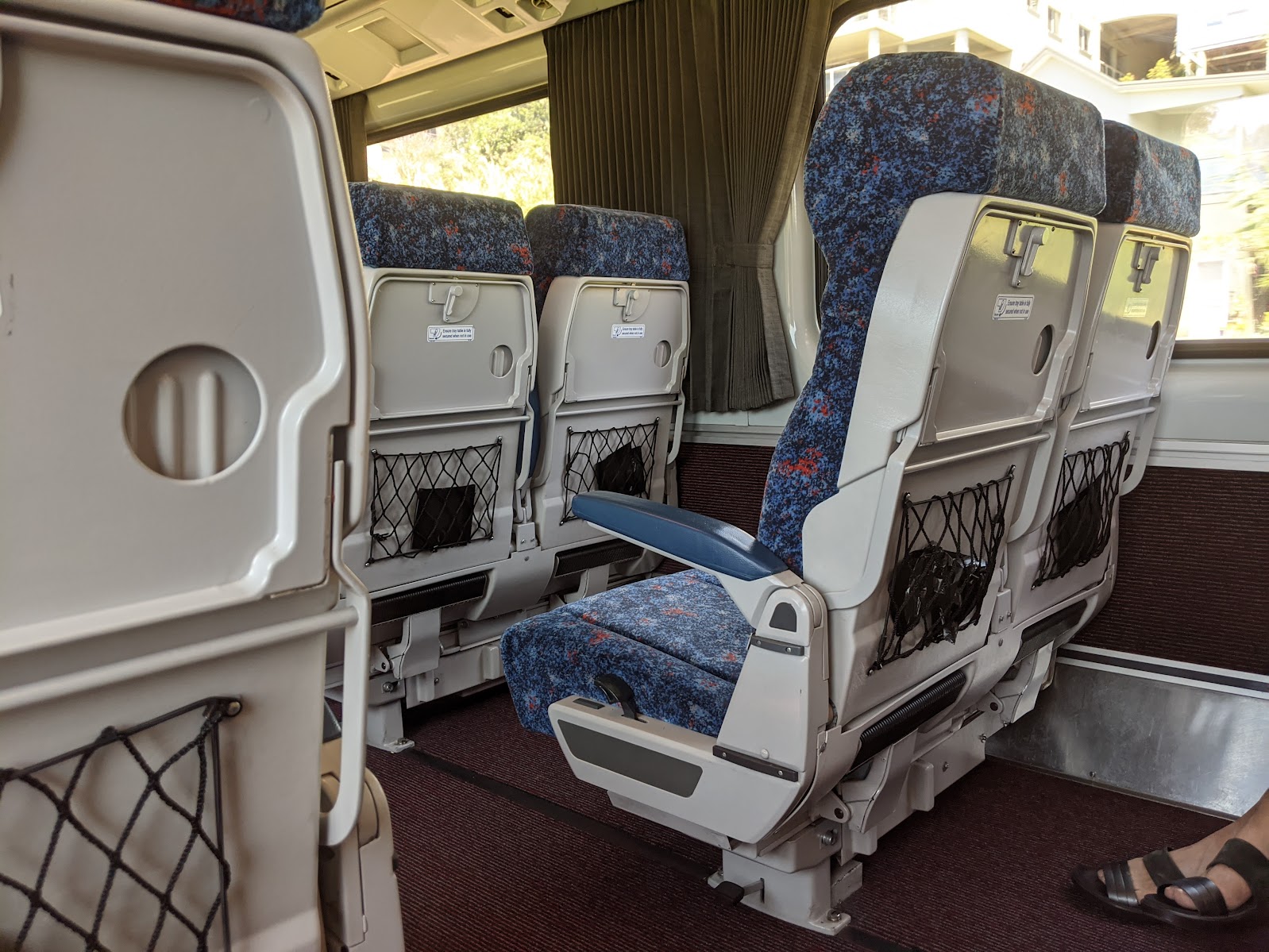
The XPT in First Class is genuinely comfortable, and the price premium over economy is small enough that on a long run it’s worth it — I went into the detail in my North Coast XPT review if you want the full breakdown. The lesson I took away: the train works beautifully as the back half of a trip, when you’ve done the driving and just want to get home without doing any more of it.
Melbourne — where the reports are all true
I’ve done the Southern XPT to Melbourne both ways, day and overnight, and I have to report that everything you’ve heard is true. There’s no wifi. On most of the trains there’s now no way to charge a phone — bring a power bank or arrive flat. And the overnight sleeper was, frankly, super average: you share a toilet with the neighbouring cabin, the arrangement isn’t obvious, and that leads to exactly the hygiene awkwardness you’d imagine.
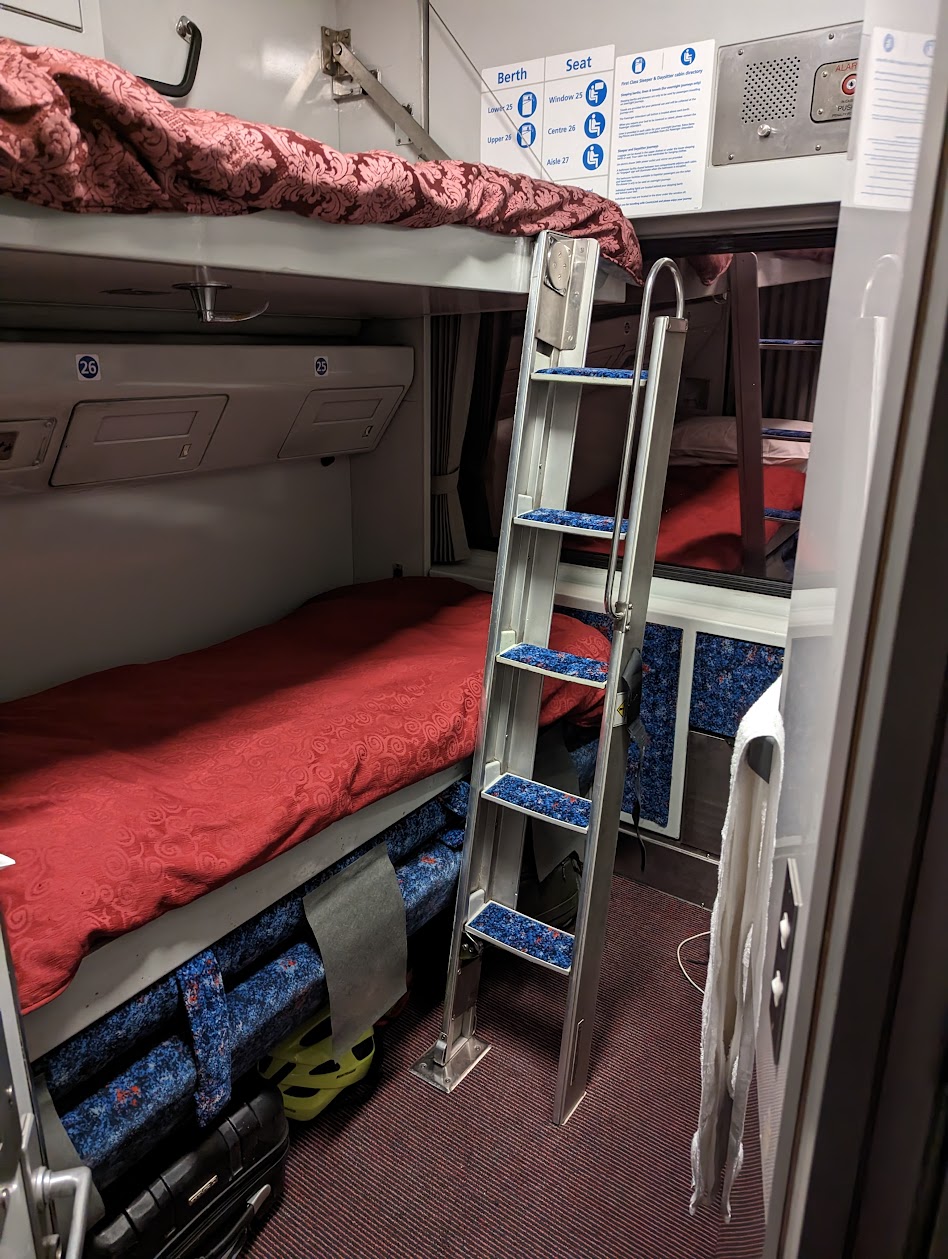
And yet I’d still recommend it, with one caveat that surprised me. If you’ve driven the Hume between Sydney and Melbourne — and most of us have — the train runs the same direction but shows you a completely different country. You’re off the motorway, behind the towns instead of bypassing them, watching the inland roll by from a window seat instead of a windscreen. Same journey, totally different views. Bring a power bank, lower your wifi hopes, and it’s a genuinely good way to do a corridor you thought you already knew.
So why build the tools?
Here’s the thing that ties all five trips together: the single hardest part of Australian train travel isn’t the journey — it’s working out what actually runs. The official sites mix real trains with replacement coaches, the timetables are scattered across PDFs, and some of the best services run only once or twice a week, so if you miss the day you wait days for the next one. I kept doing this research from scratch for every trip.
So I built two free tools to do it once and for all. The NSW Train Explorer maps every genuine long-distance train out of Sydney — Dubbo, Broken Hill, the North Coast, Melbourne and the rest. The Queensland Train Explorer does the same for the Spirit of Queensland, the Spirit of the Outback, the outback services, and the two great tourist trains. Trains only, no coach legs, verified against the official timetables. Pick a destination, see when it actually leaves and what you’ll be riding.
And once you’ve worked out what runs, the next question is how to do it without paying full freight. If you’re planning more than a trip or two, the NSW Discovery Pass is the best-value way to ride the lot — I rate it as one of the best train passes anywhere in the world, and after a couple of return runs out west it’s already paid for itself.
If your tastes run grander than mine, my co-conspirator Milton has the champagne list: his top Australian train journeys covers the Ghan, the Indian Pacific and the Spirit of the Outback — the bucket-list luxury runs. He has champagne taste; I’m domestic prosecco. Between his list and my five trips above, you’ve got both ends of the Australian rail experience covered.
None of this compares to a week on European rails. But it’s what we’ve got, and there’s a particular pleasure in it that the efficient networks don’t have — the slowness, the emptiness out the window, the sense that you’re crossing a genuinely big country at ground level. Lower your expectations about speed and wifi, raise them about the view, and Australian trains will surprise you. They keep surprising me.
Australian train travel — the questions people actually ask
Is the Sydney to Broken Hill train worth it?
Yes, if you treat it as the adventure rather than just transport. The Outback Xplorer is a genuine 13-hour outback epic through changing landscapes, at a fraction of the cost of the luxury Indian Pacific. My tip: fly out and take the train back, breaking the return with a night in Orange so you cross the Blue Mountains in daylight.
Can you sleep on the train from Sydney to Melbourne?
Yes, the overnight XPT has sleeper berths, but be realistic about them. The cabins are functional rather than luxurious, and you share a toilet with the neighbouring cabin, which isn’t always obvious and can get awkward. For a single night it’s fine, but it’s a long way from the private sleeper experience on the Spirit of the Outback.
Is there wifi on NSW TrainLink trains?
No. There’s no wifi on NSW TrainLink long-distance trains, and on most of them there’s now no way to charge a phone either. Bring a power bank and download anything you want for the trip before you board, or you’ll arrive flat.
Should you fly or take the train to Broken Hill?
The smartest option is both. Qantas runs frequent-flyer redemption flights to Broken Hill, so you can burn points to fly out and arrive fresh, then ride the Outback Xplorer home for the scenery. Plane one way, train the other, with a stopover in Orange in the middle, gives you the adventure without 13 hours each way.
Is first class worth it on Australian trains?
On the long runs, yes. The price premium over economy is usually small, and over ten-plus hours the extra legroom, greater recline and quieter carriage are worth it. On the Spirit of the Outback it’s a different thing again, a private sleeper cabin rather than just a better seat.

Planning this trip? Sort your data before you land
An eSIM is a digital SIM you install on your phone before you fly — no swapping a physical card, no local SIM queue when you land, no roaming bill shock.
Airalo covers 200+ destinations — up to 15% off with our link
Codes: DREWDEALNEW (new users) · DREWDEAL (existing users)
(Small referral our way if you use our link — doesn’t change your price.)